Monday, 18 May 2009

Working, Not Flagging

The new internationalism has been made possible by work environments that make it easy.

I, an Irishman living in England, spent Tuesday and Wednesday sharing a platform with (amongst others) a woman who works for a French company describing her work in Belgium, an Italian describing his (excellent) work for his Swiss-owned cable company, someone whom I think was Croatian describing his work for a Norwegian mobile operator, an Egyptian describing his work in a telco in Saudi Arabia, and an Englishman working in Germany doing projects in Greece. We were speaking at a conference organised in the Czech Republic by an amazingly efficient producer who is half-Finnish and half-German and based in Estonia.

This growing comfort with international working is, I think, one of the most profound changes in business that I have witnessed over the past 10-15 years. Part of the change has been the EU's role in creating what it originally set out to be - a 'common market' - by enforcing a relaxation of international controls between its (seemingly ever-increasing) numbers. And part of the change has been the increasing willingness of people of all ages - but young people in particular - to uproot themselves and go somewhere else for work, recreation and learning.

These forces would not be enough, however, were it not for the creation of platforms like this conference for people to come together - and the acceptance of English as a (forgive me) lingua franca for common working. In other words, the need for change is not enough - people will only commonly change the ways they work if these new ways of working are made as easy as possible.

Just like any other change, in fact...

Mike

Thursday, 30 April 2009

A Fatal Flaw

If you want to make change happen, don't confuse symptoms with causes.

I have a deep underlying psychological flaw - I greatly enjoy an argument, especially when I can pick holes in the logic. This flaw is so bad that I even took a degree in Logic and Metaphysics (and no, this was not at the most boring university in the world) and spent much of my life working for a consulting company that is the world's leading practitioner of the application of rigorous logic to troubleshooting business problems.

Most of the time, I can get by without this flaw coming to the surface and becoming such an immense social disability that I drive friends away and have to grovel with abject apologies the following day…

Sometimes, however, something sets it off.

The most recent trigger was when I was browsing JP Rangaswami's excellent blog, Confused of Calcutta, where in one entry he references a site illustrating how we can all be seduced by cognitive biases. (Strongly related to what used to be referred to as 'Perceptual Set' back when I was teaching Psychology). Fundamentally, the site lists a litany of cognitive biases to which we are all prone.

This is, of course, useful information. In many ways, it is a Get Out of Jail free card for any argument, especially if one is losing. Knowing about these things, one can say: "The only reason you can hold that position is because you have a cognitive bias about...." - which can't be gainsaid, as the bias is supposedly unconscious.

In a similar vein, I have a huge amount of time for Scott Adams. His books contain an immense amount of common-sense, leavened by a caustic cyncism and humour. One of his books (The Joy of Work) also contains a checklist that mounts a terrific assault on the flawed logic often encountered in the trenches of business, entitled "You are wrong because…" - you can find a copy of the list here.

It is an interesting experiment to apply this logic to the standard shibboleths of change management ("You must secure the buy-in of stakeholders for the change to succeed," for example, or "You can only introduce enduring change by changing the culture").

If you do, what seems like common sense often turns out to be flawed. In fact, in many cases our logic about change confuses symptoms with causes - such as thinking that resistance to change is what we need to fix, instead of fixing the workflow, feedback and perceived consequences which are the causes of such resistance. Or thinking that if people say that they accept the need for change then their behaviour will change as a result - and then being surprised and frustrated when this does not happen.

Such flawed logic means that the standard approaches to change management not only appear to be faulty, but in many cases will actively damage the success of your change effort.

Change is an emotional thing - but it is pointless if the rationale is faulty. Let's think differently.

Let's think better.

- Mike

Friday, 24 April 2009

The Law of Unintended Consequences

The standard ways of thinking about change may be creating the very problems they are being asked to address.

An awful lot of change effort, time and money is typically spent engaging with, educating and securing the buy-in of people to the changes we need to make.

By seeking their buy-in, then, by implication, we are asking them to be responsible for the change's success. (Or, as the more sceptical might suggest, making them responsible for its failure). No wonder people resist buying in.

Our efforts to create buy-in are actually creating resistance. Logical resistance.

And, if they don't buy-in, what do we do then? Buy-in assumes choice. If people choose not to buy-in, do we scrap the initiative? Or do we press on and force them to do what we want regardless? In which case, did they really have a choice to begin with?

The rational response to to being presented with such a false choice is apathy and cynicism.

Resistance, apathy and cynicism. Ask any change professional and they will tell you that these will kill a change deader than roadkill. Yet our very efforts to overcome them are, in large part, responsible for creating them.

The standard answers no longer apply. To make change work, we need to do something different.

And that is why I do what I do.

Mike

(Photo credit: Jens Nicolay)

Saturday, 18 April 2009

HR are often change victims, rather than champions

HR people are often asked to lead change, but lack the traction - and the tools - to do so. In consequence, they often end up victims of the change process themselves.

Just had a fascinating conversation with a prospective client who was asking my opinion about managing 'cross-cultural' issues and the role of HR in dealing with them. I had thought my answer would be too provocative for her, but strangely enough we had a meeting of minds.

The company provides a range of customer services through an international service chain. They have had tremendous problems ensuring that the customer gets the same high standard of experience regardless of the location providing the service. In fact, when customers complain about the experience, the primary cause of the complaint is less to do with poor service as it is to do with inconsistent service.

The task of fixing this has been given to a team led by Human Resources, and they have been working on it for more than six months - running education sessions, doing a lot of employee communications and ensuring that there is alignment of pay and performance systems against customer service criteria in each location.

All worthy stuff. What difference has it made? As far as the volume and nature of customer complaints are concerned - absolutely none.

When I heard the problem and their solution, I was not at all surprised at the result. In just about every case that I have seen where HR has been given responsibility for dealing with cross-cultural issues, it has been a signal failure, for three reasons.

First, as soon as we begin to label or discuss issues as "cross-cultural" we are moving away from the real issue, which is: what performance (behaviour / language) do we want to see, and what do we have in place in the business to ensure that we get it?

Almost always, the answer to this question lies in treating it as an operational issue, not an HR issue. If we need people to perform, we need to set standards for performance (this has to be an operational issue) and create performance environments (workflow, priorities, skills, triggers, short and long-term consequence systems, feedback) that make these standards possible. Again, almost all of these need to be set and managed at operational level, consistently.

Second, HR in many organisations lacks operational credibility. They are heard to speak a different language (Human Capital Management, anyone?) and often are seen as detached from the business. So their ability to influence real behaviour on the ground is very limited, especially when compared with the influence of operational line management.

Third, HR don't usually feel the pain. Their performance measurement and rewards tend not to suffer when cross-cultural issues affect business performance. Their priorities, attention and sense of urgency tend not to be same as those directly in the business. So while HR people often suffer stress and frustration, it is more often because they have been asked to fix something outside their control than feeling the operational pain directly.

This is not to say that HR cannot add huge value to any cross-cultural activity - facilitating the introduction of common ways of working, creating infrastructure for performance measurement, ensuring alignment of standards, and helping handle the fall out when things go wrong are all examples of what they can do. But to have them lead the resolution of cross-cultural issues is, in my experience, an invitation into a World of Pain -for them and for the company

So what are we do? First thing is to enable the managers who feel the operational pain to fix the problems. We do so by helping them work out where things can be changed to make things better; we show them what needs to change for this to work; we guide them to understand how to implement this change, and we support them to put the change in and make it stick.

And we do so with the support of HR - but we don't ask them to lead what they can't change...

Mike

Wednesday, 9 July 2008

The Results Are In...

A new Bloomstorm survey report has just been released and the results show that current approaches to change are not working.

We have just surveyed a range of people experienced in business change about their perceptions of change success and the results are enlightening.
  • Half of those surveyed think that most change initiatives fail
  • Everyone has seen change projects fail to get the buy-in they need
  • Almost two-thirds of respondents think that no more than half of all change initiatives get the buy-in they require
  • Everyone has seen change initiatives forced through or imposed
  • Of these, more than half of those surveyed state that these forced or imposed projects fail
  • Senior and front-line management are seen to be almost twice as important as any other business function, including training or IT, in terms of their value to successful change implementation
What these findings suggest is that our current approaches to change - the change orthodoxy, if you will - simply aren't working. On these findings, most changes are likely to fail, and the chances of failure increase as change initiatives are imposed. But given the downturn in the economic climate, it's a safe bet that more uncomfortable changes will have to be imposed on companies if they are to survive.

In sum, the survey says that these changes - which many of us will have to implement - have a very poor chance of success. So we are caught between the rock of necessary change and the hard place of probable failure...

If we are to succeed with change, we need to think differently about change. We need to think specifically about the environments in which people work, to make it easier to work in new ways, rather than harder.

The question, of course, is why we don't do this already...

Mike

PS If you would like a copy of the survey report, just drop us an email to that effect at info@bloomstorm.com with your name, company and email details. We'd like to know what you think...

(Photo Credit: Susan McManus/www.sxc.hu)

Wednesday, 7 May 2008

Not drowning, but waving...

Successful change implementation requires that you reduce the perception of risk. The best way to do this is to change the work environment so that it makes the change easy.

If I asked you bet your mortgage on a sure thing at the Derby, you would probably be reluctant to do so. But (as many shareholders and customers of the British bank Northern Rock can testify) our mortgages aren't necessarily safe in our financial institutions, either. There are no certainties about the future.

Which is one reason why people worry about change. They can't be sure that it will work out as promised, and they can usually see many ways in which it won't.

So, if we want people to work differently (which is all, really, we mean by 'business change' most of the time), we need to understand where they see the risks to be. And this is where many traditional views of change fall down.

This is because most approaches to change look at things like 'overcoming resistance' and 'obtaining buy-in' - which is to say that they look at creating a positive upside for the individual to change. This is fine, as far as it goes, but does nothing to address the underlying cause of resistance - namely the individual's perception of risk.

It is like teaching someone on dry land to swim and telling them it's great and they will love it, but not letting them near the water to practice if they agree to not to worry about drowning.

Effective approaches to change, however, put much more emphasis on reducing the perception of risk. How? By changing the work environment so that people need to work differently to succeed - but also taking care that the new way of working is also the easiest. In other words, put them into the water gently, with support - even before they know how to swim properly, so that they realise that the water isn't as dangerous as they thought.

Less friendly, but in many cases even more effective, is to remove the choice altogether: make the change quickly and have them accommodate to the new way of working regardless of whether they have bought in or not - thus stopping their fear of the unknown from getting them in the way. But of course, pushing people into the water is only going to work if (a) the water is a comfortable temperature (b) people can swim and (c) they've changed into their swimming costume...

So next time you're thinking about change, worry less about the swimmer and worry more about warming up the swimming pool...

Mike

Thursday, 10 April 2008

The Dog That Doesn't Bark

Change is about hearts and minds. Most advice focuses on the heart - but we need to address the mind if we are to address the rational causes of resistance and make it work.

An axiom of much change management advice is that people resist change. Regardless of how true this is in general, in business many of the problems of change are laid at the door of people resisting the change.

This in turn has created a mini-industry of change-management professionals offering advice almost all of which is concerned with overcoming resistance. Workshops, town hall meetings, posters, stakeholder management, mugs, force-field analysis and a whole panoply of consultant jargon, academic theorising and a panoply of tools, instruments and methods to 'engage people', 'secure buy-in' and 'obtain senior management commitment'.

And almost all of it barking up the wrong tree.

The issue is not overcoming resistance. It's about understanding the causes of resistance and removing them.

Most of the time, people resist change because the work environment in which they find themselves makes resistance a reasonable response to change. In other words, they resist change because the business environment encourages them to do so.

To give a simple example: if, say, we want middle managers to use a central recruiting process rather than go to their own local network of recruiters, then we will see rational resistance if the new process compared with current local practice is slower, more cumbersome, less flexible, has higher impact on local budgets, is less trustworthy or reduces the manager's choice over whom they hire. If I am locally measured on these things, reducing my ability to meet these metrics will, of course, increase my resistance.

No amount of persuasion, engagement or group working will change this logic. To change the logic, we need to change those aspects of the work environment that make resistance a correct and rational position.

So: if you want to make change happen (rather than talk to people about change), here are a few things to consider. Identify three or four places in the workflow of your new way of working where the quality of the process is visible.

Now change the environment round these three or four places by implementing answers to questions like these. What triggers the new way of working? What is in place to make it easy, practical, quick and aligned with relevant local metrics? What standards of performance are expected? What information do people get in real time about how well they are doing - and who notices?

Have the business put in place specific actions to reduce specific causes of resistance, real-time, in key places, as people work in the new ways. (And conversely, put in place things to make working the old ways harder).

Don't overanalyse, don't try to change everything (as I said, three or four places only) and don't work too hard to secure 'buy-in'. Try making operational changes quickly and seeing what works in terms of performance. When things work, the performance changes. 'Acceptance' is secondary.

You should find quite quickly a cluster of focused specific work environment changes that lead to people working differently. Document these and implement them pragmatically if you need to to roll the change out further.

While efforts to overcome resistance through persuasion, communication and engagement are good things, experience - and logic - show that you will get a better outcome if you adjust the work environment instead: this is the dog that doesn't bark.

- Mike

Saturday, 5 April 2008

Hitting the high notes

Sometimes, to hit the high notes, you need to aim beyond them.

Back in my youth, I directed a production of Twelfth Night (modern dress, lots of colour, tried to keep it clear and moving at pace - and above all, funny) and had a ball. One of the reasons I loved doing the whole theatre thing was that it gets you to learn an awful lot very fast - and I don't mean the lines.

I mean things like this. We had commissioned some original music and songs for the show, but our actors were actors, not singers, so they were understandably nervous about doing the music justice. One actress in particular had trouble rehearsing one song where she had to hit a high 'A' note. Every time she tried, she lost it. Her confidence and my patience were rapidly ebbing. She turned to Chris, the musical director and said, "I can't do this."

Chris was, however, a man of genius. Infinitely calm, he said, "Let's see." And he sat down at the piano and said, "I'll change the song to a different key. Give it your best shot, trust me, and let's see what happens."

When he played the intro for the song, I was surprised - instead of shifting the song down, he had moved the key up. The actress also looked surprised, but he caught her eye and she nodded. She sang the song in the higher key - and again crashed and burned on the top note. She pulled herself up and said, in a distressed voice, "Sorry, Chris, it didn't work."

She was surprised to see Chris bound up from the piano and walk straight over to her with a big smile on his face. "Ahh, but it did work," he said. "Your problem was that you couldn't hit the high A. But then I shifted the key, asking you to go even further, to a high C. You didn't hit it - but you know what you did do? You sang a perfect A on the note before, on the way up to C. You did it."

After that, they went back to the normal key, and she hit it clean out of the ballpark.

The point is this: If we want to help people achieve their true potential, we need to set high standards. And sometimes we need to set targets that they initially believe are beyond them. But by striving for excellence beyond what we have done before, even if we don't always make it, at least we will always be good - and sometimes, we will be brilliant.

Mike

Thursday, 27 March 2008

Blessed Are The Peacemakers

Great change is often a matter of small actions, constant conversation and doing the right thing. In this case, it is also the stuff of heroes.

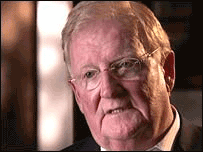
The documentary The Secret Peacemaker, broadcast on BBC2 last night, was one of the most moving things I have seen for a long time. It was the story of a businessman called Brendan Duddy, who lives in Derry in Northern Ireland.

He isn't, by the normal ways of looking at things, anyone special. He was an ordinary man who owned a chip shop. But what he did was amazing.

A republican and a pacifist, Brendan acted as the broker to facilitate dialogue between the IRA and the British Government for more than twenty years during the 70's, 80's and early 90's, the darkest time of the Troubles.

He set up meetings at his house and elsewhere to get representatives of the IRA and the British Government together, during times when neither side could be seen to be talking to each other. He did so at immense personal risk to himself and his family. In Northern Ireland at this time, to be seen talking to a British soldier could get you shot by IRA paramilitaries paranoid about 'touts' or informers. Loyalist paramilitaries were shooting catholics seemingly at random. Being seen with militant republicans could have you thrown in jail indefinitely without trial.

There was nothing in it for Brendan, except the belief that dialogue was better than killing, and that the killing had to stop.

For twenty years, he spoke in coded messages on bugged telephone lines, drove through the dark to anonymous houses to convey messages to men who were ordering murders by the day, and kept it all secret from his friends and neighbours - everyone except his family.

He brokered meetings in his house, making cups of tea for killers and intelligence agents sitting on his sofa, being a trusted witness to conversations where the politically unthinkable was discussed and deals were done - ceasefires, doors kept open, promises made - that paved the way to the Good Friday agreement and the brittle but enduring peace that exists in Northern Ireland today.

I am sure that the story I saw had been cleaned up, sanitised and edited nicely - and that the truth is more ambiguous, murky and uncomfortable than the version broadcast. But regardless of what we learn in the future I have no doubt that this man is a hero of the highest order.

He did the right thing when it would have been easier to put his head in the sand. He risked everything he had to make things better, when there was no realistic prospect of success for years. And he did it effectively alone - not working for anyone else, not following anyone else's policy - but because he personally saw that something needed to be done and he could do it.

I grew up in Northern Ireland during the Troubles - and because I know how bleak those days were, I have nothing but admiration for this man who tried, in small steps over many years, to work to end them.

And, at the risk of sounding crass, I think Brendan can teach us something about change. First of all, the primary driver of peace process was conversation - dialogue between people - not 'communication' formally issued. Indeed the main time things went wrong for him was when some information was released the wrong way - announced in the House of Commons - rather than in discussion.

Secondly, if you want change to happen, it is much better to get out there and do something, rather than wait, even if you don't know every step of the journey. Brendan facilitated the dialogue, often when neither party was clear about what they were to talk about. Doing something and getting the dialogue going was critical.

And finally, change is about having a compass, not a map. Brendan was a pacifist - he wanted the killing to stop. He didn't have a great plan for peace, he just knew that if he could put the relevant people together, then the killing became less likely. It was a move in the right direction and that was the right thing to do.

Now the changes we have to face in our companies are much less mortal, are more defined and are much simpler than the things Brendan faced. But his example, I think, is something from which we can all learn.

- Mike

Tuesday, 18 March 2008

The Word Is Spreading

Bloomstorm features in a new podcast and in another blog.

Technology is a wondrous thing - it lets anyone do anything... And in this case, it lets me talk to Howard Graham of the Made Simple Group about Bloomstorm in this podcast. In it, you'll hear me explain where the name 'Bloomstorm' came from, why 'resisting change' is not what you think, and why change implementation, rather than management, is critical...

It was pleasing also to find that the most recent Bloomstorm Briefing (our free bimonthly newsletter offering tips and insight on change - you can sign up for it here) gave Howard a theme for his latest blog - on the notion of punctuality and respect.

You know what they say: great minds think alike.

Regards

- Mike

PS We've made some nice tweaks to our website - have a look and let us know what you think of it as well. Ta.